What "technique" means in badminton
Technique in badminton is the ability to produce the desired shot trajectory from any position, with the least possible effort. It is not limited to the arm movement. A technically sound shot starts with footwork that gets you behind the shuttle, continues with a preparation that looks identical for several shot choices, and ends with contact taken high and in front, followed by a recovery to the center. A club player who hits hard but arrives late has poor technique; a player who hits softly but always in balance has good technique. On video, technique can be read across three frames per shot: the split step at the moment of the opponent's hit, the contact point, and the position a split second later. This page describes each shot one by one; each has its own detailed page complete with common errors seen on video and a dedicated drill.
Overhead rear-court shots
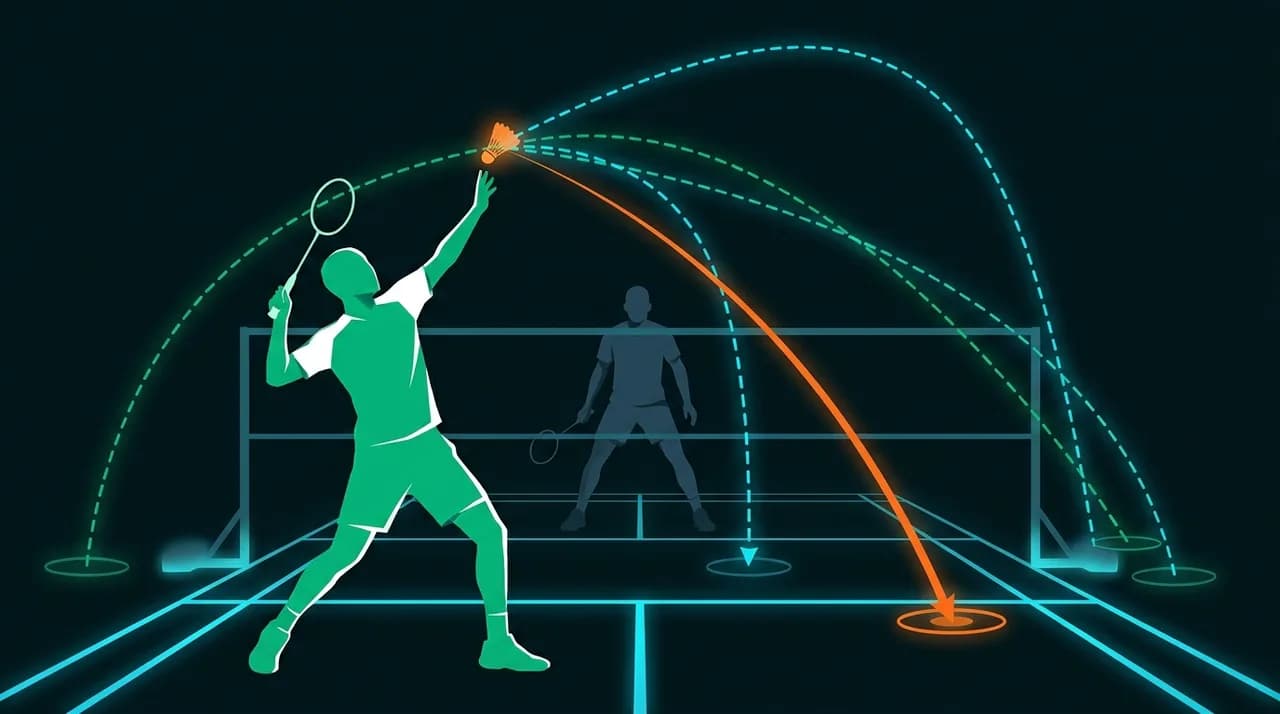
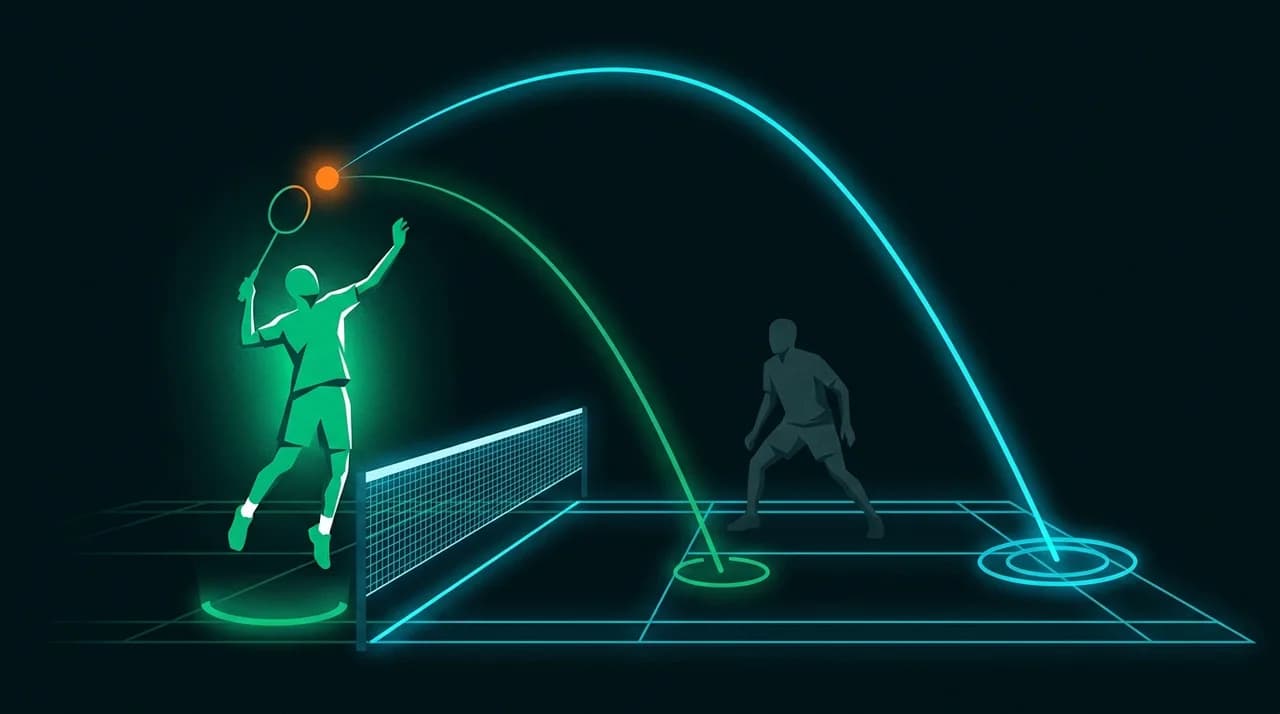
The clear sends the shuttle high and deep, all the way to the baseline; it is the most frequently played shot and the one that gives you time to recover. The drop shot starts with the same preparation and lands just behind the net; it moves your opponent forward. The smash is the downward hit that aims to finish the rally, where the angle matters more than pure speed. All three are played above the head, with a shoulder rotation and contact taken in front of the body; their true value comes from the fact that your opponent cannot distinguish between them before the hit. The rear-court backhand is the same trio played on the non-dominant side, with the thumb on the grip and the elbow leading the racket. Each shot has its own dedicated page: smash, clear, drop shot, backhand, featuring the three most common mistakes and a practice drill.
The serve, net play, and mid-court
The serve opens the rally: short and tight to force the opponent to lift, or long and high to push them to the back court, hit from below 1.15 m at contact in competition. At the net, the net drop places the shuttle short off an opponent's drop shot, the lift sends it high and deep when you arrive low, and the net kill finishes a shuttle that floats too high. In the mid-court, the drive is the flat exchange at shoulder height that determines who takes control of the net, especially in doubles. These shots are played below the waist or at shoulder level, with compact motions coming from the fingers and forearm rather than the shoulder. The common mistake is hitting them like rear-court shots with full swings, whereas they require precision and a clean stop of the racket.
Footwork, making everything else possible
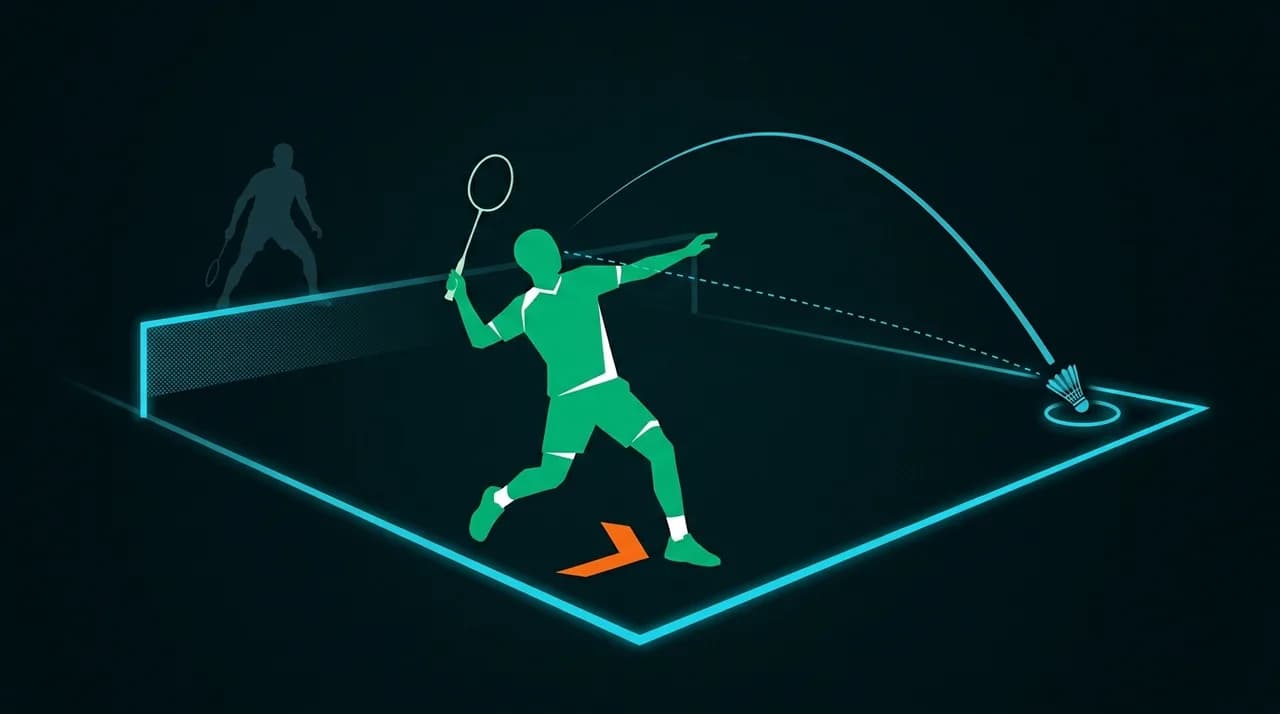
No shot holds up without proper footwork. The split step at the moment of the opponent's hit, chassé steps toward the back, the lunge on the racket-side foot toward the front, and the recovery to the center of play make the difference between a player who has shot options and a player under pressure. Most technical flaws seen on video start with being half a step late: contact behind the head, drop shot floating too long, flat backhand are primarily positioning issues. Before fixing a swing, look at where you were at the moment of impact. The footwork page details the split step, stance mechanics, and a shuttle-free drill.
How to make technical progress
One shot at a time, isolating the technique from match play. A partner or feeder feeds you ten shuttles into the exact same zone, you play the exact same shot ten times targeting a specific area, you count, then you add footwork, then you add variation. Film each set from the side, at hip level, with your entire body in frame. Video analysis spots your shots, describes the contact point, preparation, and footwork, giving you a default correction with the exact timestamp to watch. Online courses cover each shot using this framework, step by step with recorded sets, graded on technical execution criteria rather than just the shuttle result.