What the serve must do
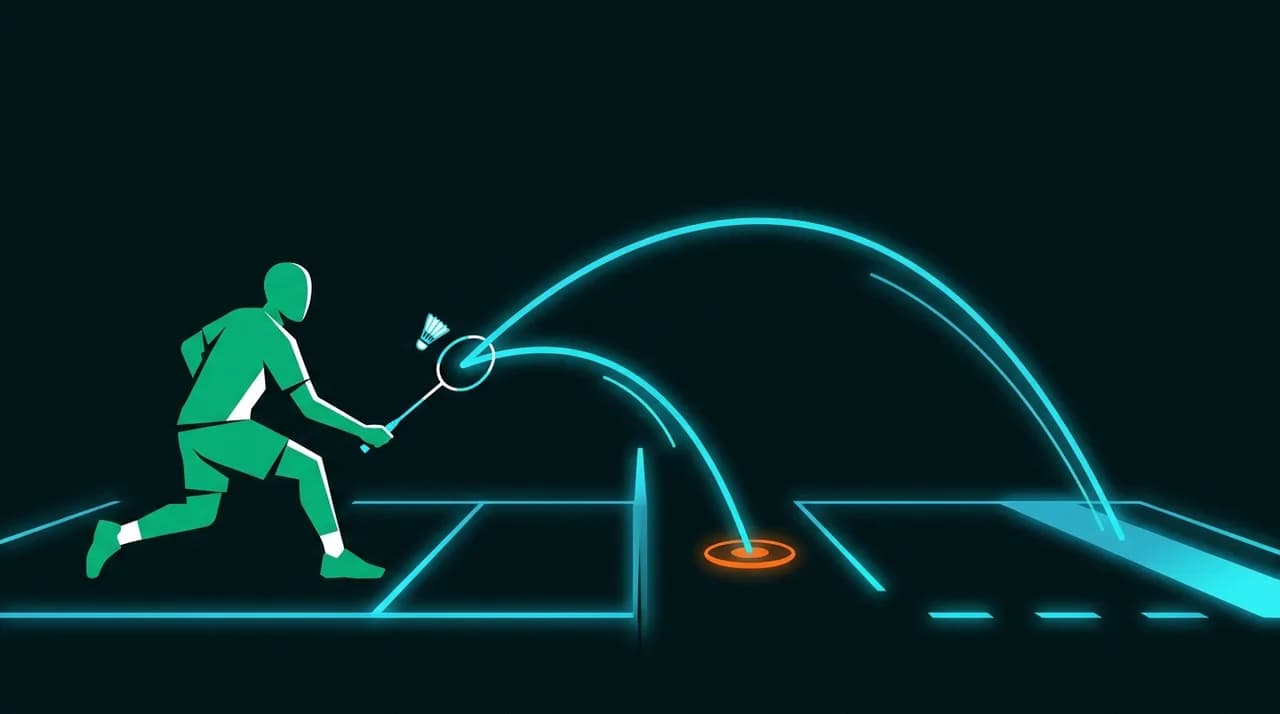
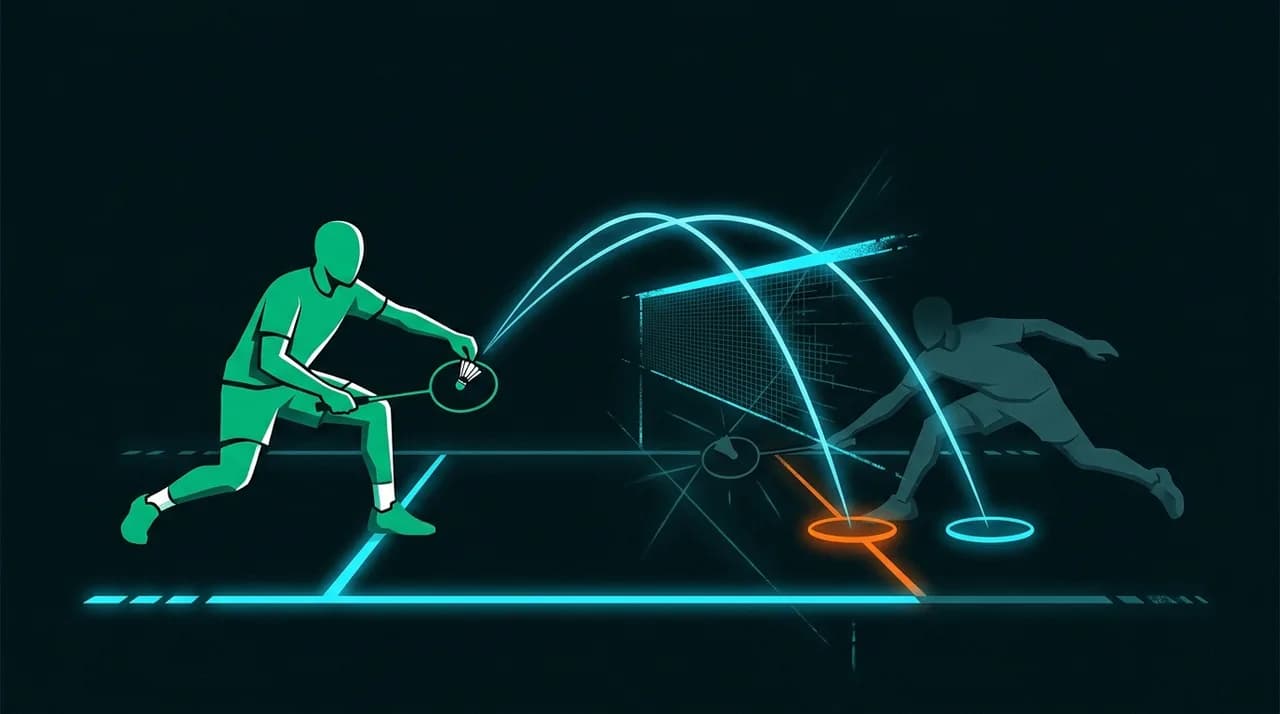
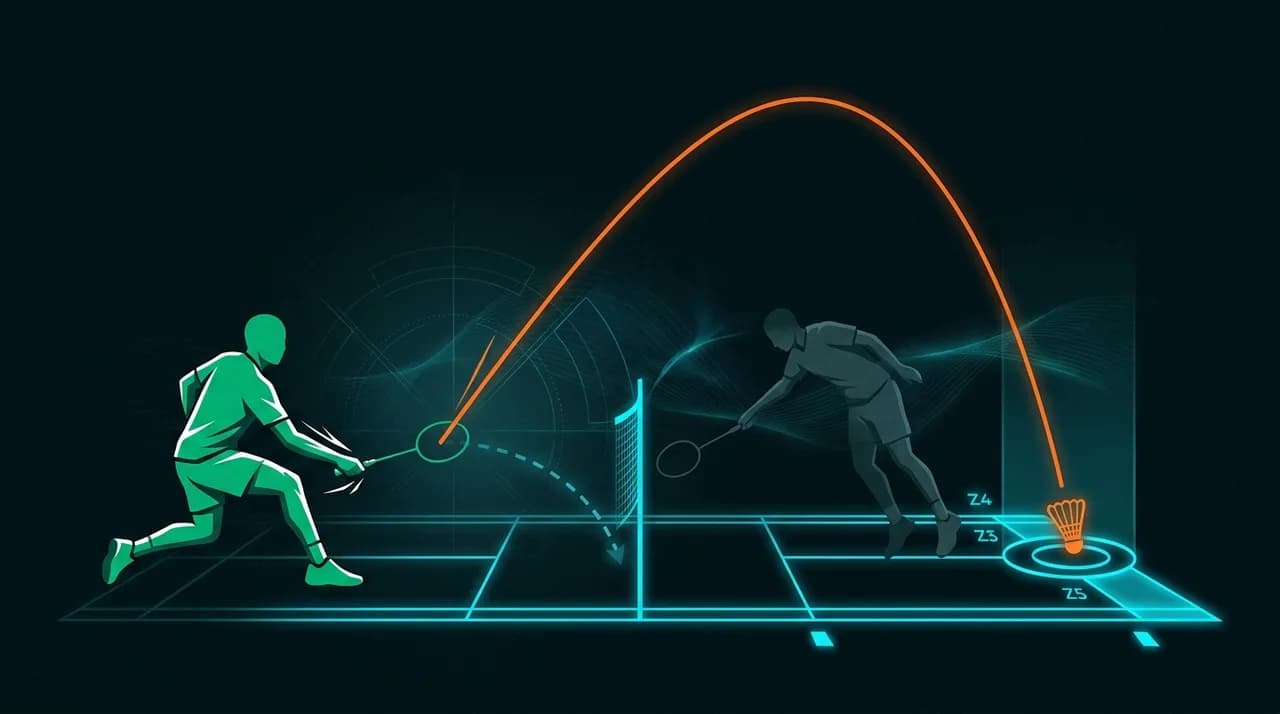
The serve opens the rally and it is the only shot where no one presses you. It has two possible missions. The short serve aims to make the opponent lift the shuttlecock: it passes just above the net tape and drops as close as possible to the service line, so that the return goes upward and offers you the first attack. The long serve aims to push the opponent to the back and make them hit while moving backward, which wears down their footwork and opens up the front of the court. In singles, the high long serve remains a backcourt weapon; in doubles, the short serve dominates because any excess height gets punished by a net rush. A serve is not judged by the movement, but by what the opponent can do with it: if their return puts you in trouble, the serve was bad, even if it was legal.
Short or long, and from where
The short serve is played with the backhand for most players, racquet in front of the body, shuttlecock held by the feathers, with a short push from the forearm and thumb. The point of contact is low and in front, the trajectory is flat and skims the net tape. The long serve is played with the forehand, shuttlecock dropped in front of the hip, with a rotation of the shoulders; the shuttlecock goes up high and drops near the baseline. The choice depends on the situation. Against an opponent waiting far from the service line, the short serve wins the initiative; against an opponent glued to the line, a flick serve toward the backhand shoulder catches them off guard. Vary the target areas rather than the type: two identical short serves in a row are easy to read, a short serve to the center followed by a short serve out wide is not.
The three errors that video shows most often
The first is a short serve that is too high. It passes the net tape with ten or twenty centimeters of clearance and the opponent attacks it on the way down. On video, you can see that the shuttlecock is hit while it is already falling, or that the wrist flicked instead of pushing. The second is contact above the legal height limit. In competition, the entire shuttlecock must be hit below 1.15 m; at home people hit at chest height without realizing it, and the serve is a fault from the very first tournament. Framing from the side with a reference mark on the wall shows this immediately. The third is a foot moving or lifting off the ground during the hit. The rules require both feet on the ground and motionless until contact; a sliding front foot, common on the long serve, is visible frame by frame. All three flaws stem from the same issue: a serve executed like a hit when it should be executed like a precise placement.
How to practice it
Place a sheet of paper on each side of the opponent's service line, one in the center and one on the outside. Serve ten short shuttlecocks to each sheet using your backhand, counting those that hit the sheet or fall within one racquet length. Write down your score, then hit ten long serves aiming for the thirty centimeter strip in front of the baseline. Film the set from the side at hip height, with the net tape in the frame: you will see the clearance above the net tape and the height of your contact. The program "Short and long serve: accuracy" covers this drill in two scored steps, and the programs "Short serve MS" and "Flick serve MS" specify the target areas to aim for in singles.
What video analysis gives you on a serve
You send a set of serves, a point, or a match sequence, filmed from the side or from behind. The analysis timestamps each serve and describes what it sees: contact height, clearance above the net tape, landing zone, foot stillness, and what the opponent managed to do with the return. It provides a correction for every flaw detected, with the exact time to watch it. On a practice set, it counts the repetitions, spots the best and worst ones, and tells you what changes between the two. All you need is a stable camera angle showing your whole body, the racquet, and the net.