
Split Step: Synchronization and Start
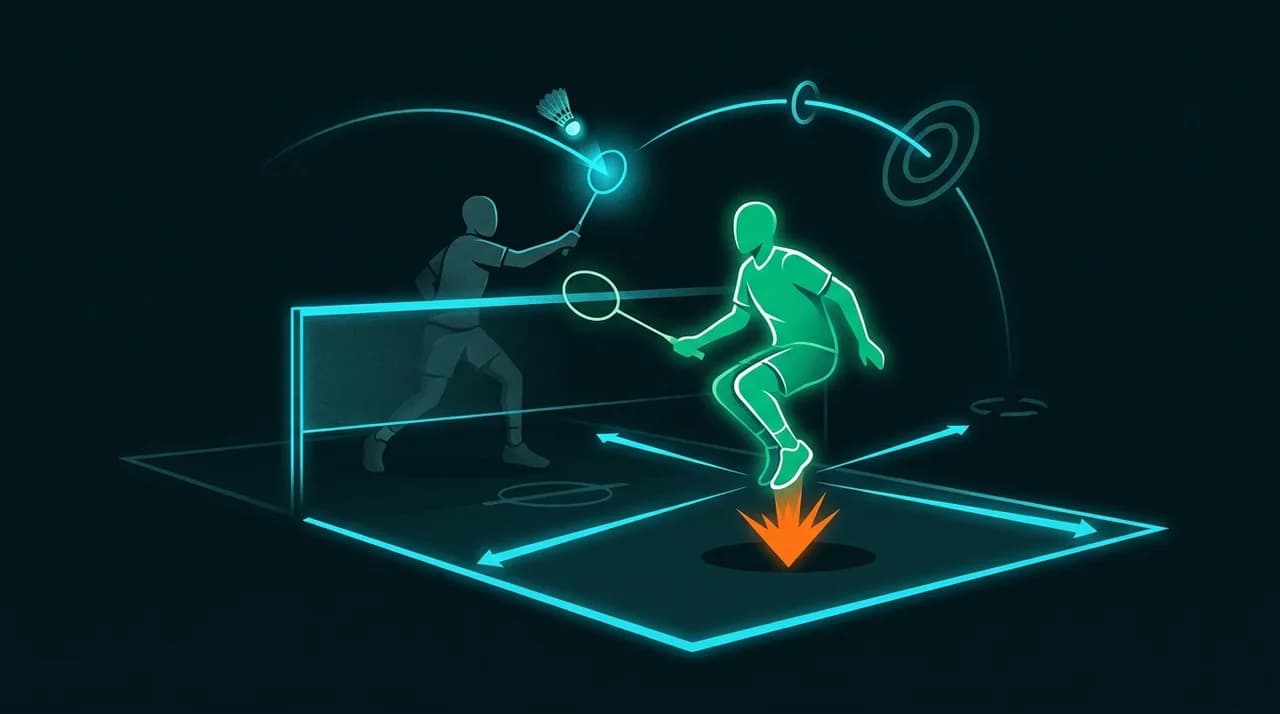
On-court goal
Synchronize a split step with each opponent's shot to start faster and cover the entire court.
Course outline
Each step unlocks the next once validated.
- Available now
Split Step on the Spot
- After step 1
Synchronized Split Step on Impact
- After step 2
Split + Directional Movement
- With Essential
Variable Rhythm Split
- With Essential
Split in a Real Match
Frequently asked
Who is this badminton course for?
This course targets the beginner discovering badminton or consolidating the basics. The selection of drills, the targeted observables and the AI's feedback tone are calibrated to that level, neither too basic nor too technical.
How long does it take to complete?
The course includes 5 steps of filmed exercises. The total estimated duration of the clips to film is around 5 minutes. This does not represent your total training time: allow extra time for prep, repetitions, and reviewing feedback. Go at your own pace, across multiple sessions if needed.
What will I actually learn?
Synchronize a split step with each opponent's shot to start faster and cover the entire court.
Do I need a partner or coach?
All steps in this course require a partner, either to feed shuttles in a controlled rhythm or to play themed exchanges. The feedback on your video complements your coach's advice. Check the insights in your sequence and adapt the exercises to your situation; AI does not replace guidance from a coach.
How much does it cost?
The first 3 steps are free with Starter. Essential (2.99 €/month), Basic, and Pro unlock all steps in this course. Course previews do not use up your open video analysis minutes.
Technique notes
The Context
The split step is a mini-jump performed just as the opponent hits the shuttle. It recharges the elastic energy in your legs and allows you to start faster towards any area of the court. Without a split step, the player is static at the critical moment: it's impossible to react in time.
The Concept
- Knees bent, mini-hop of a few centimeters.
- Silent landing on the balls of your feet.
- Synchronization: the descent coincides with the opponent's hit, never after.
Mental image: a spring under your feet, you barely go up, but you land ready to pounce.
To avoid: jumping too high (late landing), landing loudly (straight legs, spring lost), splitting AFTER the opponent's hit (no benefit).
How This Course Is Structured
We first work on the isolated movement in place, then synchronization with a partner's hit, then the split + start sequence, then variable rhythm, and finally application in a real match.
To Go Further
- Court Center and Oriented Recovery: to transform the split step into intelligent court coverage.
- High Hand / Low Hand Maneuverability: to exploit the quick start.