
Building in Neutral: Alternating High and Low Pressure
Navigate the neutral power dynamic by alternating high pressure (backcourt) and low pressure (net) to destabilize your opponent and create opportunities.
 Construction·Advanced
- Steps
- 5
- Total time
- ≈ 5 min
- Level
- Advanced
- Catalogue
- Competitor
- Discipline
- Men's singles
Why this course
Build in a neutral situation by alternating high pressure (backcourt) and low pressure (net) to transition into a favorable situation.
Theory
The Context
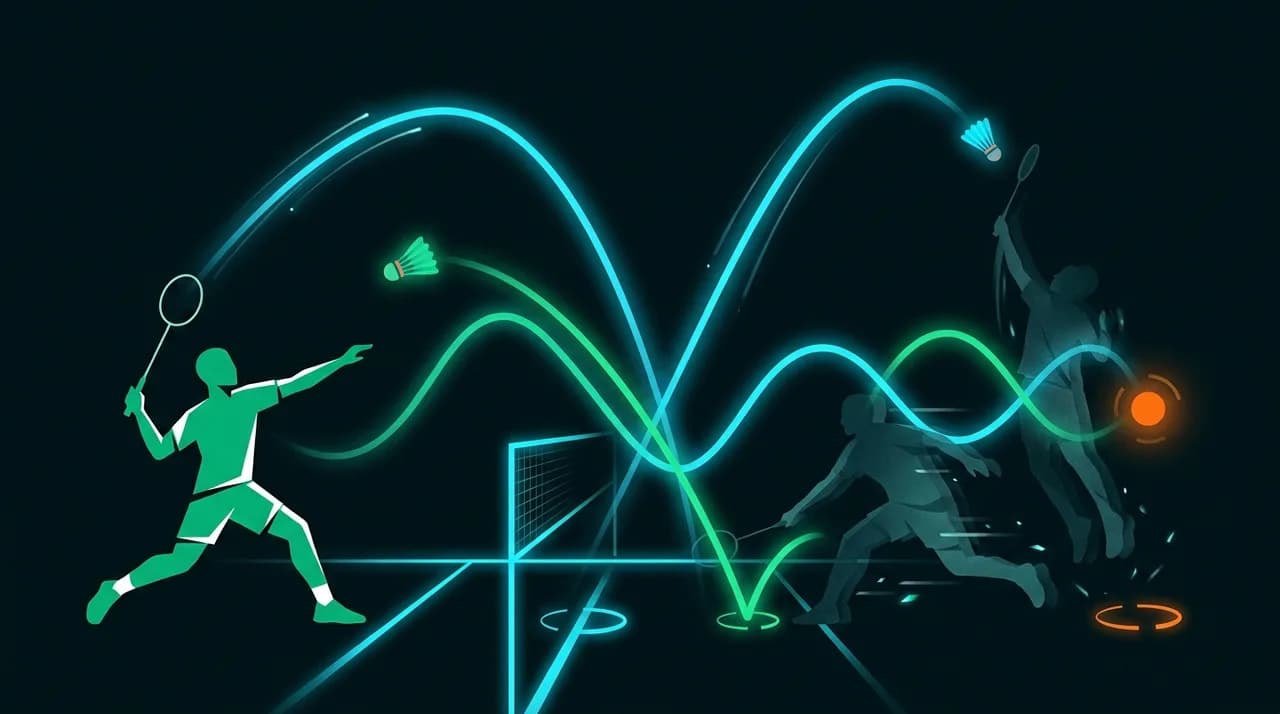
The neutral situation is statistically the most frequent in singles. The player who knows how to build opportunities from it gains the upper hand. Alternating high pressure / low pressure is a key tool for this.
The Concept
- High pressure (backcourt): forces the opponent to retreat, to play with an underhand or defensive overhand shot.
- Low pressure (net): forces the opponent to come forward, to play a delicate underhand shot, exposes them to a finishing lift.
Alternating these pressures prevents the opponent from stabilizing their footwork and anticipating zones. This is the definition of constructed play.
How This Course Is Structured
We work on precision for each pressure in isolation, then on alternation, then on application in free construction.
To Go Further
- Even shot in construction: to avoid giving away your intentions.
- Constructing from a disadvantageous position: moving from neutral downwards.
What you'll work on
5 Steps- 0115 s – 1 min 40
Step 1 — Precise Deep High Pressure
Multi-shuttle1 vs 1 - 0215 s – 1 min 40
Step 2 — Precise Low Net Pressure
Multi-shuttle1 vs 1 - 0315 s – 1 min 45
Step 3 — Random High/Low Alternation
Multi-shuttle1 vs 1 - 0415 s – 1 min 40
Step 4 — Directed Rally: Alternating Construction
Directed rally1 vs 1 - 0515 s – 2 min
Step 5 — Themed Match: Alternating Pressures
Themed match1 vs 1
Frequently asked
Who is this badminton course for?
This course targets the competitive player refining their game under pressure. The selection of drills, the targeted observables and the AI's feedback tone are calibrated to that level, neither too basic nor too technical.
How long does it take to complete?
The course includes 5 steps of filmed exercises. The total estimated duration of the clips to film is around 5 minutes. This does not represent your total training time: allow extra time for prep, repetitions, and reviewing feedback. Go at your own pace, across multiple sessions if needed.
What will I actually learn?
The course focuses on rally construction, height alternation and pressure patterns. Each step isolates one observable (a measurable aspect of the stroke or movement), films your reps, and the AI scores you with a personalized improvement axis.
Do I need a partner or coach?
All steps in this course require a partner, either to feed shuttles in a controlled rhythm or to play themed exchanges. The feedback on your video complements your coach's advice. Check the insights in your sequence and adapt the exercises to your situation; AI does not replace guidance from a coach.
How much does it cost?
This OTTHN course is reserved for PRO subscribers (€39/month). The first step is accessible with a BASIC plan to discover the competitive approach before upgrading.